
Products
-
-
-
-
Recent reviews
-
 Don Requinto 2 - Bachata Rhythmic Guitar
by Juan A.
Don Requinto 2 - Bachata Rhythmic Guitar
by Juan A. -
Zouk Lab
by Samuel Paixão
-
Gems
by leandro ceballos
-
Shattayard – Dancehall Shatta VST
by Anonymous


The Hidden Story of LANDR — How first AI Mastering Changed Music Production Forever
For decades, finishing a professional song required something many independent artists simply did not have access to: a mastering engineer.
Mastering is the final stage of music production. It is where a track is polished, balanced, and optimized so it sounds great across every listening environment, from headphones and car speakers to streaming platforms and club systems.
Traditionally, this stage required professional engineers working in specialized studios with expensive equipment and years of experience.
For independent artists, this created a major problem. Professional mastering could cost anywhere between $50 and $300 per track.
For musicians releasing multiple songs or full projects, these costs quickly added up. Many talented producers simply could not afford professional mastering services.
Then a new type of technology entered the scene. AI Mastering.
One platform helped lead this transformation and changed the music production landscape forever: LANDR.
Today, LANDR allows musicians to upload a track and receive a mastered version within minutes. What once required expensive studio sessions can now be done online with AI powered tools.
This shift has had a massive impact on independent music creators worldwide.
Why Traditional Music Mastering Was a Problem for Independent Artists
Before the rise of AI mastering tools, independent artists often faced several obstacles when trying to release professional sounding music.
After finishing a mix, the next step was mastering, a process that ensures a song has the right loudness, clarity, and balance for streaming platforms like Spotify and Apple Music.
However, traditional mastering came with several challenges.
1. High Cost
Hiring a professional mastering engineer was often expensive, especially for independent producers releasing music regularly.
For many emerging artists, this meant either delaying releases or skipping mastering altogether.
2. Limited Access
Professional mastering engineers are often located in major music hubs like Los Angeles, London, or New York.
For producers working remotely or in smaller music markets, access to these professionals could be limited.
3. Slow Turnaround
Mastering engineers typically work with many clients at once, meaning artists might wait days or even weeks for their tracks to be finalized.
For artists releasing music frequently or working on tight schedules, this delay could slow down their entire release strategy.
These challenges created a gap in the music industry.
A gap that technology was ready to fill.
The Birth of LANDR and the Rise of AI Mastering
LANDR was created by MixGenius, a Montreal based audio technology company focused on using machine learning to improve music production tools.
The idea behind LANDR was ambitious: build an AI system capable of analyzing audio and applying mastering techniques automatically.
When LANDR launched publicly in 2014, the concept sounded almost futuristic.
Could artificial intelligence really master a song?
Many industry professionals were skeptical at first but independent musicians quickly became curious.
The platform allowed users to upload a track and receive a mastered preview almost instantly. Within a short time, thousands of artists were testing the system and while early versions of the technology were still evolving, the results were promising.
As the AI learned from thousands of tracks and mastering decisions, its capabilities improved significantly. Today, LANDR has mastered millions of songs worldwide and is used by producers, DJs, and independent artists across the globe.
You can explore the platform here
How AI Mastering Actually Works
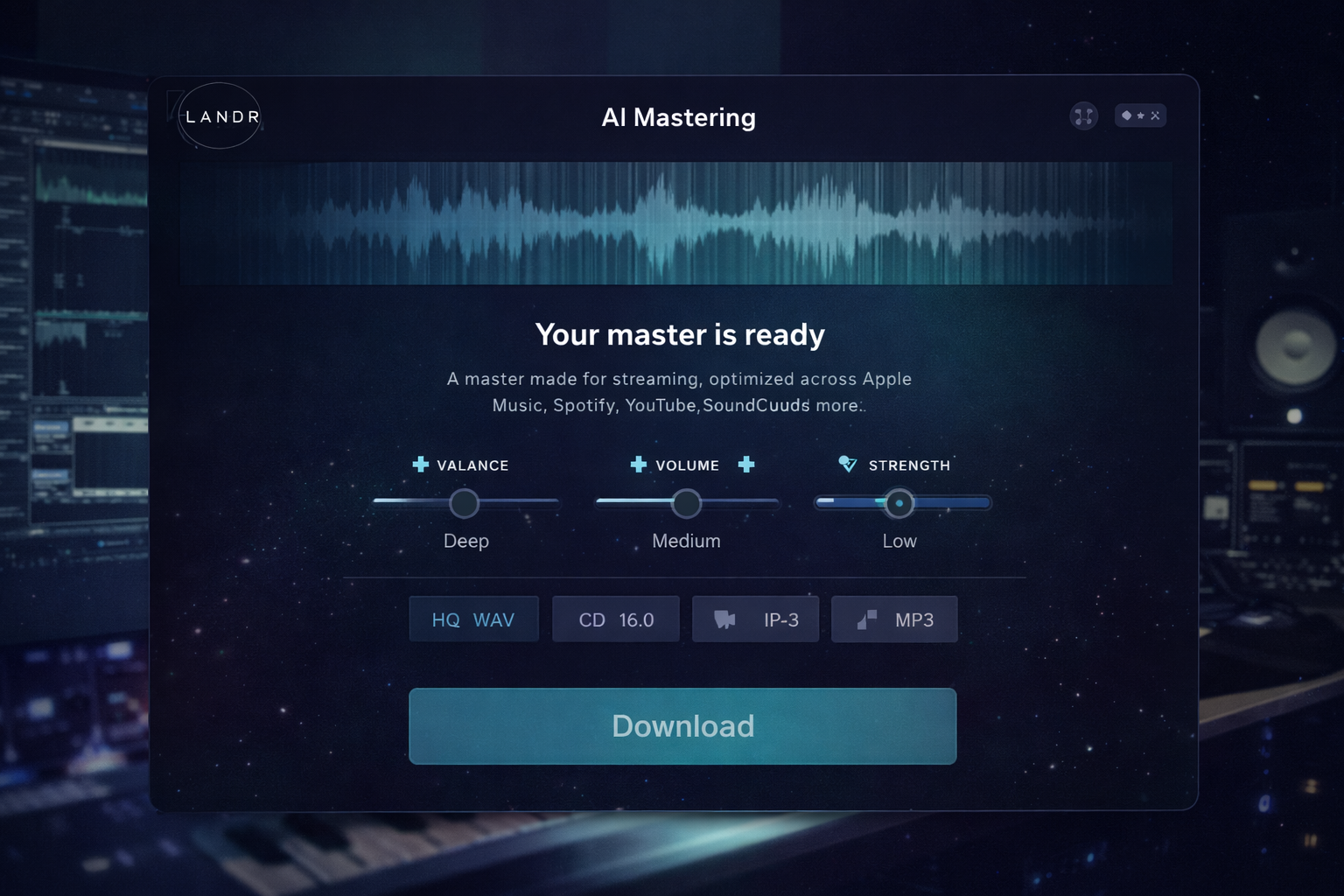
AI mastering systems like LANDR rely on machine learning models trained on thousands of professionally mastered tracks.
When an artist uploads a song, the AI analyzes multiple aspects of the audio.
These include:
• frequency balance
• dynamic range
• loudness levels
• stereo width
• transients and peaks
Using this analysis, the system applies mastering processes such as:
• equalization
• compression
• limiting
• stereo enhancement
The goal is to optimize the track so it meets modern streaming standards while preserving the artistic character of the mix. Unlike traditional mastering sessions that can take hours, AI mastering can process a track in minutes. This speed gives artists the freedom to experiment with different mixes and instantly hear how they translate after mastering.
Over time, platforms like LANDR have expanded beyond mastering into full creative ecosystems.
Today LANDR also offers:
• music distribution
• collaboration tools
• plugins for mixing and production
• sound packs and sample libraries
This combination of tools supports artists throughout the entire music creation process.
Why AI Mastering Changed Music Production
AI mastering did more than just automate a technical process, it reshaped how independent artists create and release music.
Accessibility for Independent Creators
One of the biggest impacts of AI mastering is accessibility. Artists anywhere in the world can now master tracks instantly without needing access to expensive studios. This has been especially important for emerging music markets where professional mastering services may be harder to find.
For independent producers building music careers online, tools like LANDR make professional audio quality more achievable.
Faster Release Cycles
In the streaming era, consistency is key. Artists often release singles regularly to stay connected with their audience. AI mastering dramatically speeds up the production workflow. Instead of waiting days for a mastered track, artists can upload a mix and receive a finished version almost immediately.
This allows producers to move from creation to release much faster.
Creative Independence
Perhaps the most powerful benefit of AI mastering is creative freedom. Artists can experiment with different mixes and mastering styles without relying entirely on external engineers.
This flexibility encourages experimentation and helps musicians develop their own sound.
Afroplug Sound Packs on LANDR
As digital music platforms continue to evolve, they are also becoming hubs for sounds and production tools. Producers today rely heavily on high quality samples and loops to create beats quickly and explore new musical ideas.
That is why Afroplug sound packs are also available on LANDR, giving producers direct access to authentic Afro inspired sounds within their production workflow.
Afroplug packs provide:
• drum kits
• percussion loops
• melodic samples
• Afrobeat and Amapiano textures
These sounds help producers build tracks faster while maintaining authentic musical influences.
You can explore Afroplug tools here
Another useful guide for producers: How to Make Afro Soul R&B Beats with Guitars Using Afroplug Loops
And if you want to explore Afro production tools: Top Free Afro Plugins You Need in 2026
By making Afroplug sound packs available through platforms like LANDR, producers around the world can incorporate African inspired sounds into their productions.

The Future of AI in Music Production
AI mastering was only the beginning.
Artificial intelligence is now influencing many areas of music production.
Today AI tools are being used for:
• music composition
• vocal processing
• automated mixing
• sound design
However, mastering remains one of the most successful examples of AI transforming a traditional part of the music industry. Human mastering engineers still play an important role, particularly for major label releases and complex projects but AI mastering has dramatically expanded access to professional sound quality.
This technological shift has helped fuel the explosion of independent music over the past decade. Artists can now produce, master, and release music entirely from a laptop.
A New Era for Independent Creators
The rise of AI mastering represents one of the biggest shifts in modern music production. What once required expensive studios and specialized engineers can now be done online with powerful technology. Platforms like LANDR have helped democratize music creation by giving independent artists access to professional mastering tools, combined with sound libraries, plugins, and distribution platforms, creators today have more control over their music than ever before.
For producers around the world, this means one thing:
More freedom to create, more opportunities to release music and more voices shaping the future of global sound.
Conclusion
What LANDR proved is simple but powerful. Technology can remove barriers that once limited creativity.
A decade ago, professional mastering was something only artists with budgets and industry connections could access. Today, a producer with a laptop, a DAW, and an internet connection can finish a track and release it worldwide within hours.
This shift has opened the door for a new generation of independent creators across the globe. Producers are no longer waiting for permission from studios, labels, or traditional gatekeepers. They can build, experiment, release, and grow their audience entirely on their own terms.
Platforms like LANDR helped make that possible by transforming one of the most technical parts of music production into an accessible tool for everyone.
Combined with creative ecosystems, sound libraries, and tools like Afroplug sound packs, the modern producer now has everything needed to turn ideas into finished records faster than ever before.
The future of music production will continue to blend human creativity with intelligent technology. And for independent artists everywhere, that future has never looked more open.
