
Products
-
 50+ Free Plugins Guide
€8.66
50+ Free Plugins Guide
€8.66 -
-
-

Recent reviews
-
Don Requinto 2 - Bachata Rhythmic Guitar
by Juan A.
-
Zouk Lab
by Samuel Paixão
-
Gems
by leandro ceballos
-
Shattayard – Dancehall Shatta VST
by Anonymous


How to Make a Reggae Trap Beat w/ Afroplug Loops for YG Marley & Skillibeng
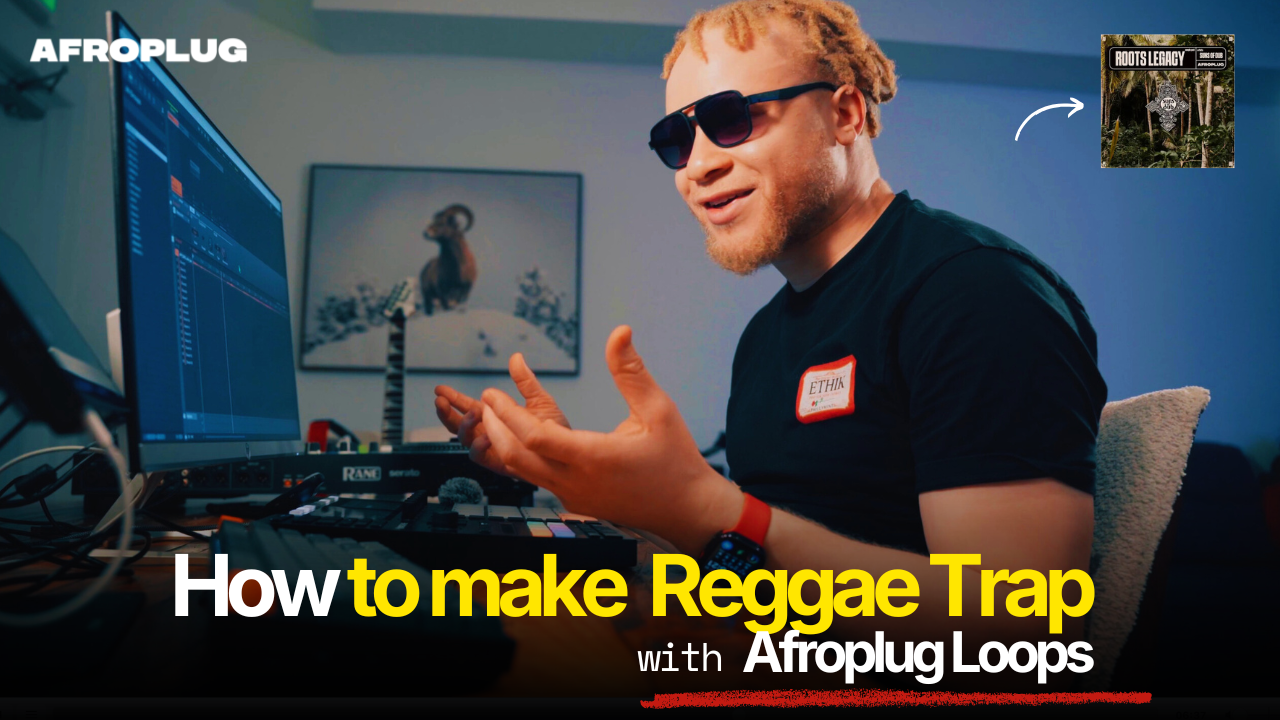
Reggae Trap is one of the fastest-growing styles requested by modern artists.
Many producers try to make it by simply adding 808s to a reggae loop — and the result usually sounds wrong.
Why? Because Reggae Trap is not a preset. It is the result of a musical evolution:
Reggae → Dub → Reggae Trap
To produce it properly, you need to understand both the culture and the rhythm mechanics first — then the beatmaking workflow.
Reggae — Definition & History (The Foundation)

Reggae is a Jamaican music genre that appeared in the late 1960s.
It is actually the third generation of modern Jamaican music.
Musical evolution in Jamaica:
Mento → Ska → Rocksteady → Reggae
Rocksteady (1966–1968) slowed down the fast Ska rhythm. Producers began emphasizing bass and groove. Around 1968, the rhythm changed again and what we now call reggae was born.
Musical Characteristics
Reggae is defined by rhythm placement, not by instruments.
Core elements:
- Off-beat guitar or piano chords (“skank”)
- Deep melodic basslines
- One-drop drum pattern (kick removed from beat 1)
- Spacious arrangements
- Social or spiritual lyrical themes
Important principle:
In Western pop, the bass supports the song.
In reggae, the bass leads the song.
Cultural Context
Reggae is strongly connected to Rastafarian spirituality, social resistance and identity in post-colonial Jamaica. It became an international voice of expression and consciousness.
Producers and engineers such as Lee “Scratch” Perry and Coxsone Dodd helped define the sound in Kingston studios like Studio One and Black Ark
Dub — Definition & History (The Studio Revolution)
Dub was not originally a genre.
It started as a studio technique in the early 1970s.
Jamaican sound systems needed instrumental versions so DJs (called deejays in Jamaica) could toast over tracks. Engineers began removing vocals from tape recordings and manipulating the music live on the mixing console.
That process created Dub.
What Makes Dub Unique
Dub is essentially the birth of modern remixing.
Techniques introduced:
- Vocal removal
- Tape echo delays
- Spring reverb
- Drop-outs (sudden silencing of instruments)
- Heavy bass and drum emphasis
The mixing engineer became a performer.
Key innovators:
- King Tubby
- Lee “Scratch” Perry
- Scientist
Dub is extremely important historically because it introduced:
• remix culture
• electronic production techniques
• DJ-based performance production
Modern EDM, hip-hop mixing and automation workflows all come from dub engineering methods.
Reggae Trap — Definition & Origin (The Modern Hybrid)
Reggae Trap is a modern hybrid combining Jamaican rhythm language with hip-hop trap production.
It did not emerge strictly in Jamaica — it developed through the diaspora (US, UK, Canada and Caribbean communities) in the late 2010s and early 2020s.
Why It Appeared
Two evolutions met:
- New generation reggae artists grew up listening to hip-hop.
- Hip-hop producers started using Caribbean grooves.
Streaming platforms accelerated this fusion because audiences stopped separating genres.
Musical Characteristics
From reggae:
- off-beat chords
- melodic basslines
- island groove
- emotional melodies
From trap:
- 808 bass
- hi-hat rolls
- punchy drum processing
- darker harmonies
Tempo usually sits around 135–150 BPM (half-time feel).
The key:
The drums sound hip-hop, but the groove still feels Jamaican.
How to Make a Reggae Trap Beat (Step-by-Step)
Now that you understand the history, here is the real production workflow.
1) Set the Tempo
Choose 138–150 BPM.
Important:
The track must feel relaxed even at high BPM.
Reggae is groove-based, not speed-based.
Use a half-time feel.
2) Program the Drums
Kick
Keep it simple.
Use:
- one strong downbeat
- one syncopated hit
Too many kicks destroy the reggae pocket.
Snare / Rim
This defines the style.
Use a one-drop influence:
the snare carries the rhythm more than the kick.
Slightly delay the snare (a few milliseconds) to create the laid-back feel.
Hi-Hats
This is where trap enters.
Add:
- light rolls
- velocity changes
- short bursts
But leave space. Reggae requires air in the rhythm.
3) Create the Bassline
This is the most important part.
In reggae-based music, the bass is the lead instrument.
Guidelines:
- long notes
- simple patterns
- groove-focused
- interacts with the kick
Avoid aggressive distorted 808s at first.
Start musical, then layer an 808 if needed.
4) Add the Skank Chords
This is the reggae identity.
Use guitar chops, organ stabs or piano chords.
Place chords on the off-beats:
Count:
1 and 2 and 3 and 4 and
↑ ↑ ↑ ↑
Never on the main beats.
5) Melody
Choose emotional and human-sounding instruments:
- electric piano
- guitar plucks
- steel pan
- soft leads
- saxophone
Keep melodies simple.
Artists need space to sing.
6) Dub Effects & Atmosphere
This is where dub influences the beat.
Add:
- delay throws
- echo tails
- reverb automation
- vocal shots
- FX transitions
Automation is essential.
Movement creates life in reggae-influenced music.
7) Arrangement
A clean structure works best:
Intro — 8 bars
Hook — 8 bars
Verse — 16 bars
Hook — 8 bars
Bridge — 8 bars
Final Hook — 16 bars
Every 8 bars: add or remove an element.
8) Mixing
Reggae Trap mixing focuses on clarity and space.
- Bass: mono and warm
- Kick: short and controlled
- Snare: bright but soft
- Reverb: use delays more than huge reverbs
You are creating atmosphere, not loudness.
Final Advice
The biggest mistake producers make is overproduction.
Reggae-based music is confident.
It does not need 40 tracks.
If the groove is correct, 8–12 sounds are enough to make a record.
Start with authentic sounds and build a modern production around them — that is exactly how Reggae Trap works.
— Afroplug Team
